
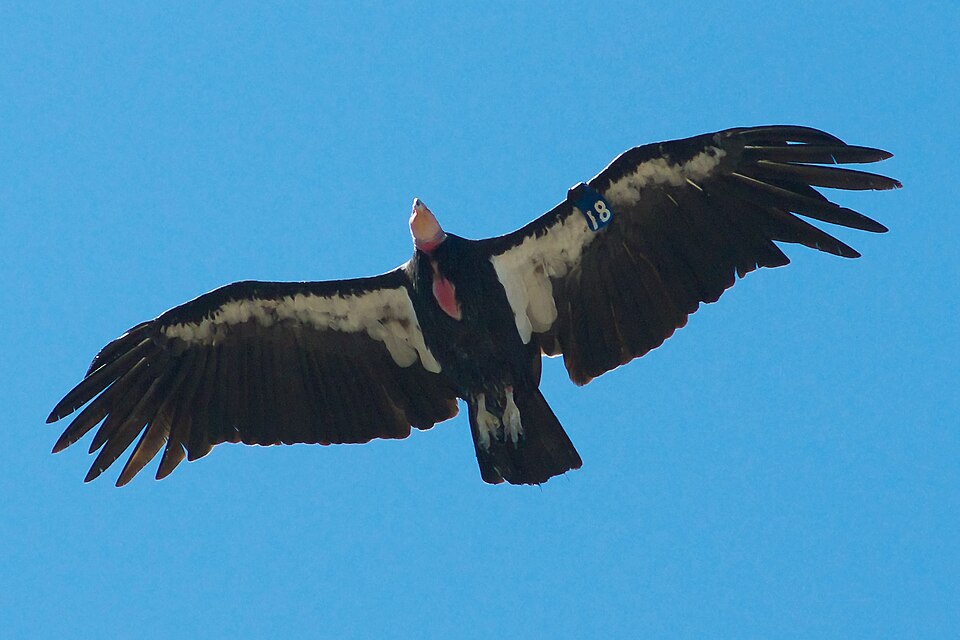
With its distinctive black feathers, red bald head, and a nearly 60-year lifespan, the California condor stands as the largest land bird in North America.
Don’t get them confused with the bald eagle, though! These birds do not kill prey; instead, they feed on dead animals.
However, during the mid-1980s, the condor population found itself at the brink of extinction, with only a few dozen birds left. Although the population has grown to around 600 condors by the end of 2025, the overall decline is extremely devastating because condors reproduce extremely slowly at a rate of one egg every two years.
Cause of Decline
So what went wrong? These majestic birds struggled to keep up with the developing world. Since condors are scavengers, they are highly susceptible to lead poisoning, which occurs through consuming the remains of tiny bullet fragments in carcasses. This leads to the condors’ nervous system being damaged and their eventual deaths.
Lead poisoning managed to kill 62% of condors in central regions and 44% in southern regions. Wild pigs, a species seemingly unrelated to condors, have spread widely across California and are hunted using lead bullets, further harming the population.
A Success Story
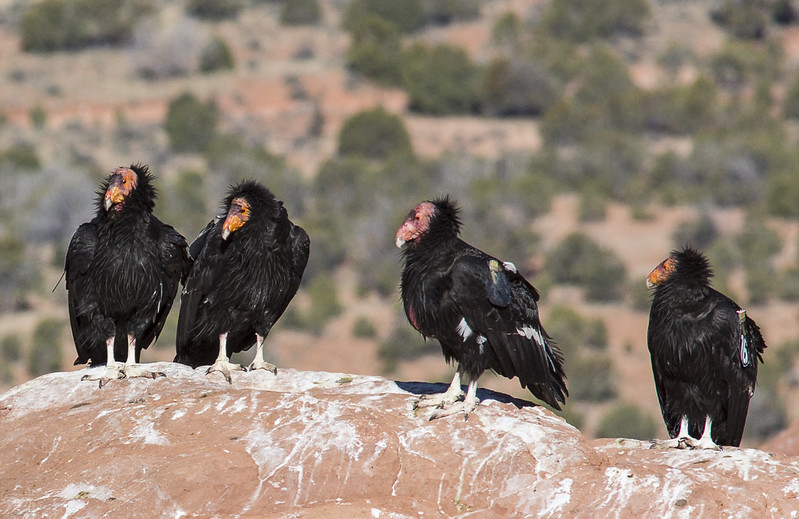
In 2019, California implemented a statewide ban on lead ammunition in hunting. These efforts made by the state have been incredibly effective in reducing the risk of lead poisoning.
The US Fish and Wildlife Service has also been historically impactful in sustaining the population through their 1996 recovery plan of establishing two wild, geographically distinct, self-sustaining populations of 150 birds each. They have maintained a population of condors in captivity to breed, in an attempt to change the condors’ listing from endangered to threatened. With their help, many birds have returned to flying freely in the wild.
Condors are now making a soaring comeback. They have returned to nest in the Pacific Northwest region for the first time in over 100 years. Biologists are closely following a pair of birds they believe have laid an egg inside the hollow of a redwood tree within the Yurok tribal lands.
This feat is a huge success for conservation efforts; however, these birds still need help. This story calls us to work together to protect these beautiful birds and keep them from disappearing forever.
Sources: Mongabay, Earth.com, FWS.gov